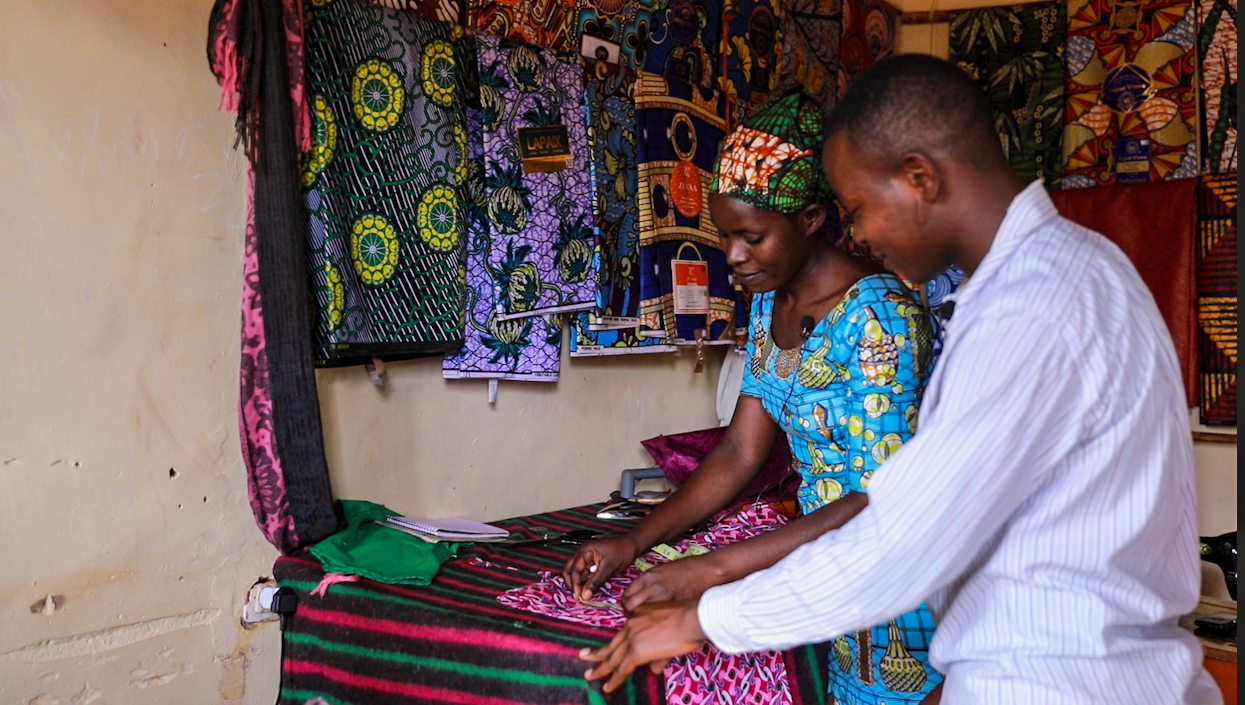
In Musya, a quiet village in Ngoma District, fifteen young people are proving that healing and livelihoods can go hand in hand. Calling themselves Abahuje Umugambi — meaning “those who unite to achieve a common goal” — the eight women and seven men have transformed shared pain into purpose, and mistrust into meaningful collaboration.
Some are descendants of genocide survivors, others from families of perpetrators, and some come from households affected by conflict. Once marked by trauma, mistrust, and hopelessness, they are now healed, united, and thriving together.
They first met under the Youth Sociotherapy Group, part of the broader Societal Healing Programme implemented by Interpeace and its partners, namely Prison Fellowship Rwanda, Haguruka, and Dignity in Detention, with funding from the Government of Sweden (2022–2025). The initiative helps communities confront trauma, rebuild trust, and restore social cohesion among Rwandans still affected by the 1994 genocide against the Tutsi and its aftermath.
“I grew up with parents who were traumatised genocide survivors,” recalls Julienne Uwitije, the group’s president. “I was afraid of perpetrators’ families and their children. I never interacted with them. Now, after Sociotherapy, I trust them so much that I can even leave my children with them.”
Turning Healing into Livelihoods
Few would have imagined that this group could come together to build a thriving community enterprise, given their difficult pasts. But Sociotherapy helped them confront trauma, rebuild trust, and work collaboratively. Individual healing soon sparked collective transformation, demonstrating that a healed and united community is also a thriving community.
After completing the healing sessions, the group chose to stay together. They formed a savings group, contributing 1,000 Rwf weekly and 200 Rwf for social activities, which facilitated ongoing support and prevented relapse. Every Friday, members meet to strategise, socialise, and collect savings.
“Our primary purpose was to create an opportunity to stay connected because we had become a family. We wanted to continue supporting each other. This group helped me a lot. I found a safe space to share my personal experiences and everyday worries,” says Aline Izabera, one of the members.
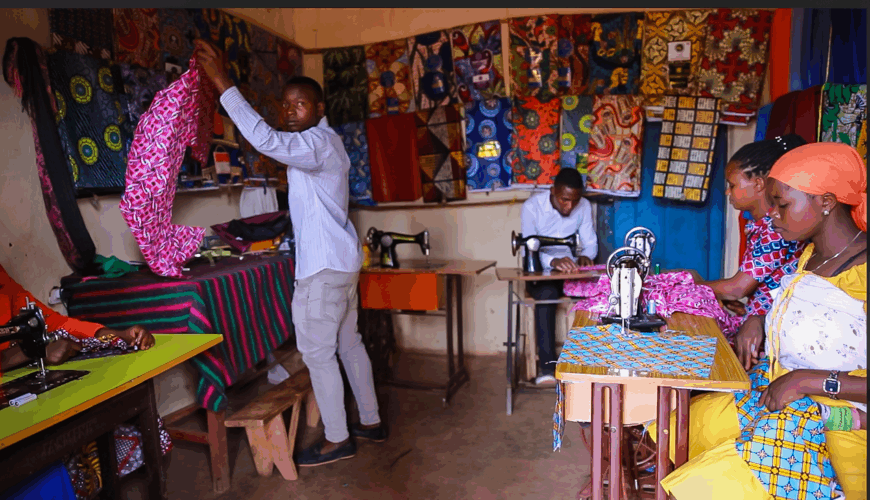
The support group quickly evolved into a community business. They launched a tailoring shop and training programme. With four members already skilled in sewing, they taught the others and expanded their operations. Within months, they secured contracts to sew school uniforms for hundreds of students and outfits for local church choirs.
Through the Collaborative Livelihoods component of the Societal Healing Programme, Interpeace supported Abahuje Umugambi with a grant of 800,000 Rwf. They purchased additional sewing machines, expanding from four to seven stations, and expanded their small tailoring school for local youth.
The Collaborative Livelihoods approach is designed to strengthen the economic resilience of individuals and communities. It’s an empowerment package that combines funding, skills training, and mentorship to enable community-owned businesses established by graduates of healing spaces to grow and sustain themselves.
The impact reaches beyond the group to individual members and their families. Members have gained confidence, empathy, and entrepreneurship skills. Through their internal savings-and-loan system, members have launched personal ventures. One runs a street food business, another built her own house, while others purchased land or livestock.
Oreste Niyotwizeye borrowed 50,000 Rwf to start a samosa-making business. “This group gave me start-up capital I could never have gotten. I couldn’t apply for a bank loan because they require a guarantee, which I don’t have. Now I am realising my dreams,” he said, joyfully mixing dough.
The group has also expanded its pig-rearing project, starting with six pigs to tap into a growing local market. Today, Abahuje Umugambi owns assets worth over 3 million Rwf, including sewing machines, fabrics, livestock, and other equipment.
The Societal Healing Programme supported 40 community enterprises through its Collaborative Livelihoods component, benefiting 529 members. It has also trained 1,767 individuals in entrepreneurship, cooperative governance, and business development, laying the foundation for lasting community growth.
A Future Built on Hope and Unity
Beyond financial gains, the most profound transformation has been personal growth and social resilience. Julienne, once shy and fearful, now leads the group and serves her local community as a cell-level secretary.
Alice, another member, describes how Sociotherapy has changed her relationships: “Sociotherapy taught me that everyone is dealing with something. Before, if someone walked by without greeting me, I would take it personally. Now I understand people better and respond with empathy.”
Jean de Dieu, the son of a genocide survivor, shares a similar awakening: “My mother always warned me not to trust others because they killed her family. But Sociotherapy helped me face anger, sadness, and grief — and, most importantly, to forgive.”
These personal transformations have rippled through families and the wider community. What began as individual healing has grown into a living example of collective resilience.
With growing ambitions, Abahuje Umugambi now plans to register as a cooperative and build a permanent workspace to expand their tailoring business and training programmes.
“We want to remain connected as a group, keep supporting each other, and build the capacities of others in our community,” says Julienne.
Their story illustrates the transformative power of pairing psychosocial healing with livelihood opportunities. By rebuilding trust, they have also built sustainable livelihoods, showing that when young people are supported to heal together, they can help entire communities thrive.